
Last updated September 10, 2026
Level 1 sweep and inspection to the NFPA 211 annual standard - flue, crown, cap, and flashing checked and photographed
Chimney sweep logs do not sweep chimneys. They loosen some creosote - which then falls where a brush and vacuum still have to collect it.
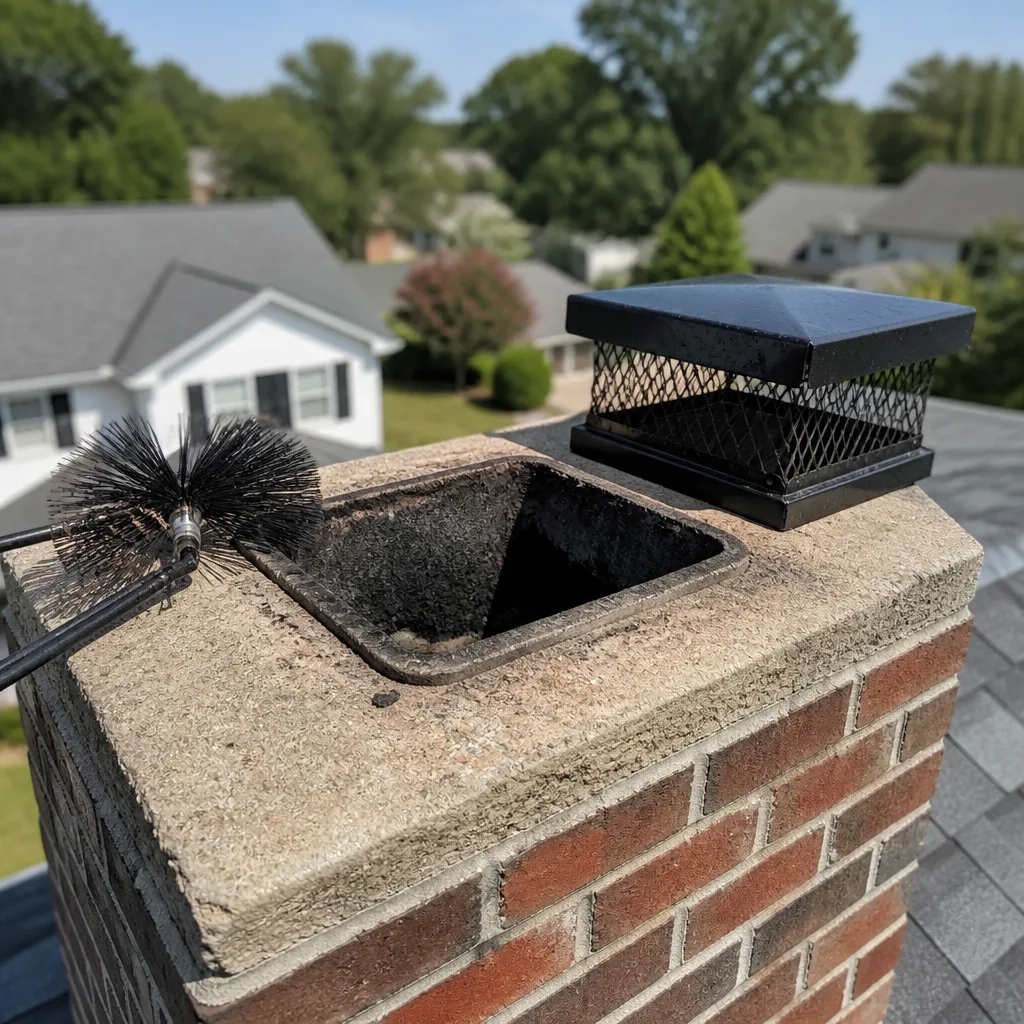
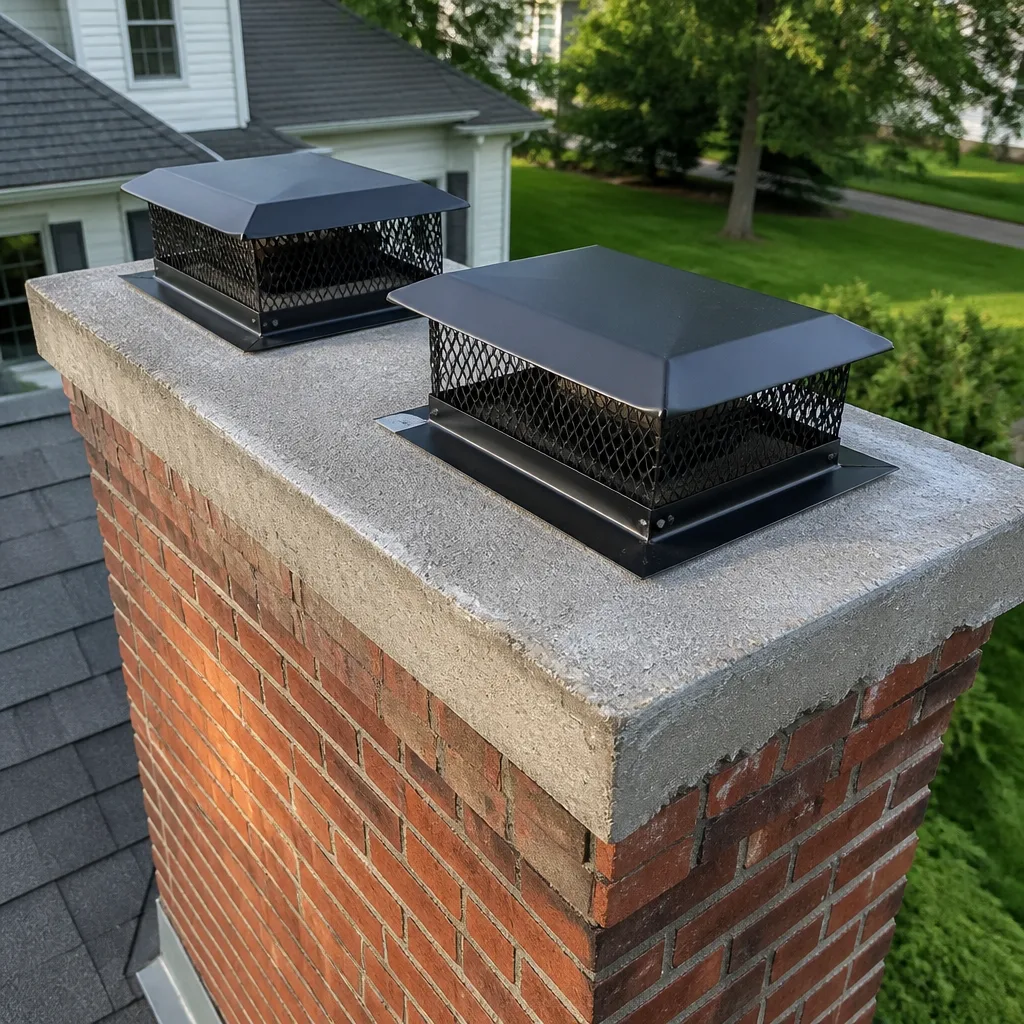

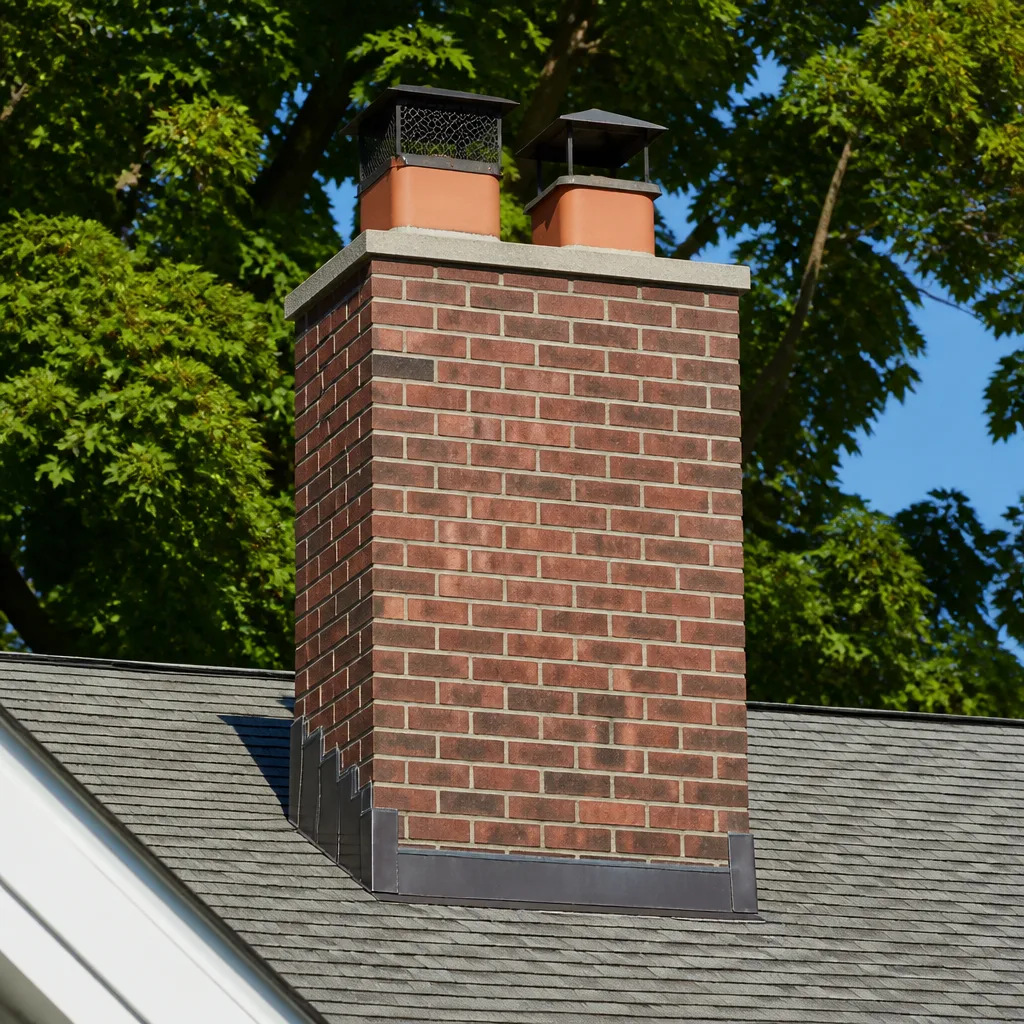
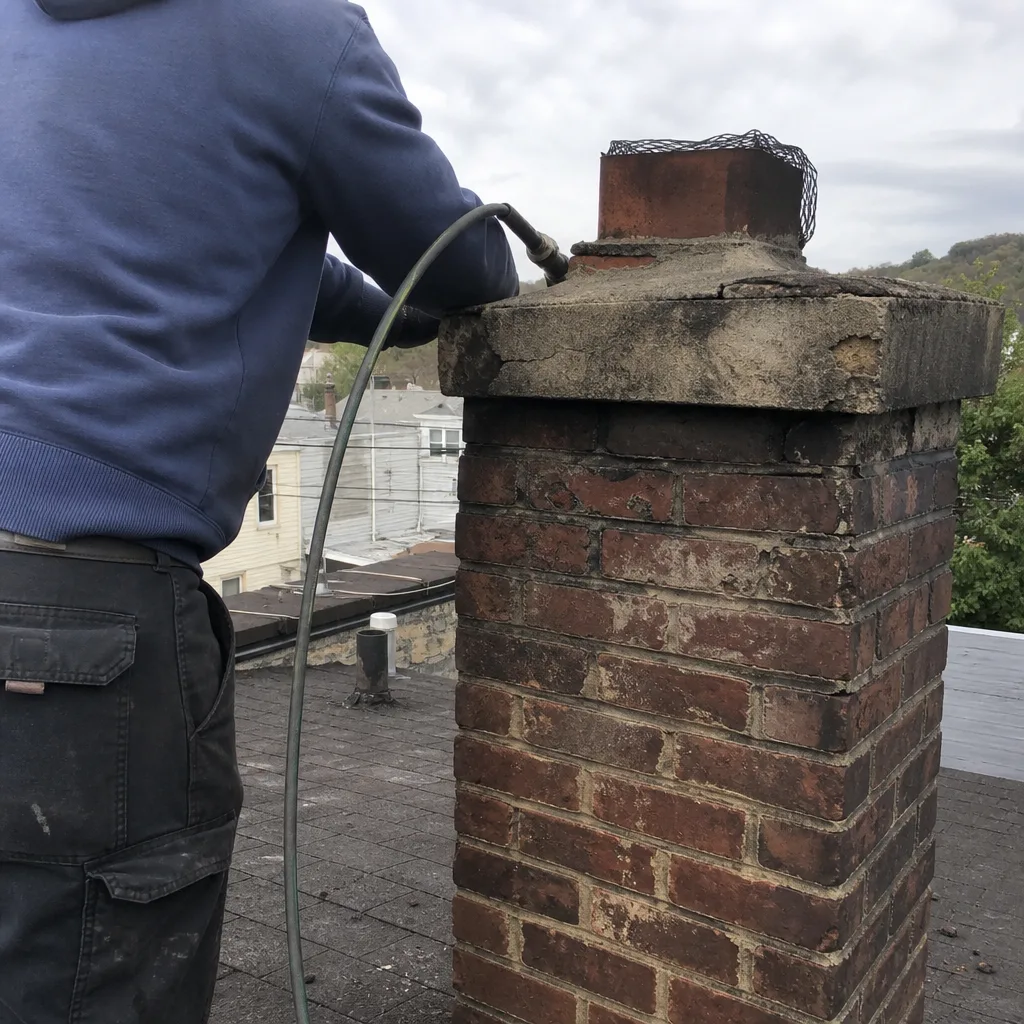 Before
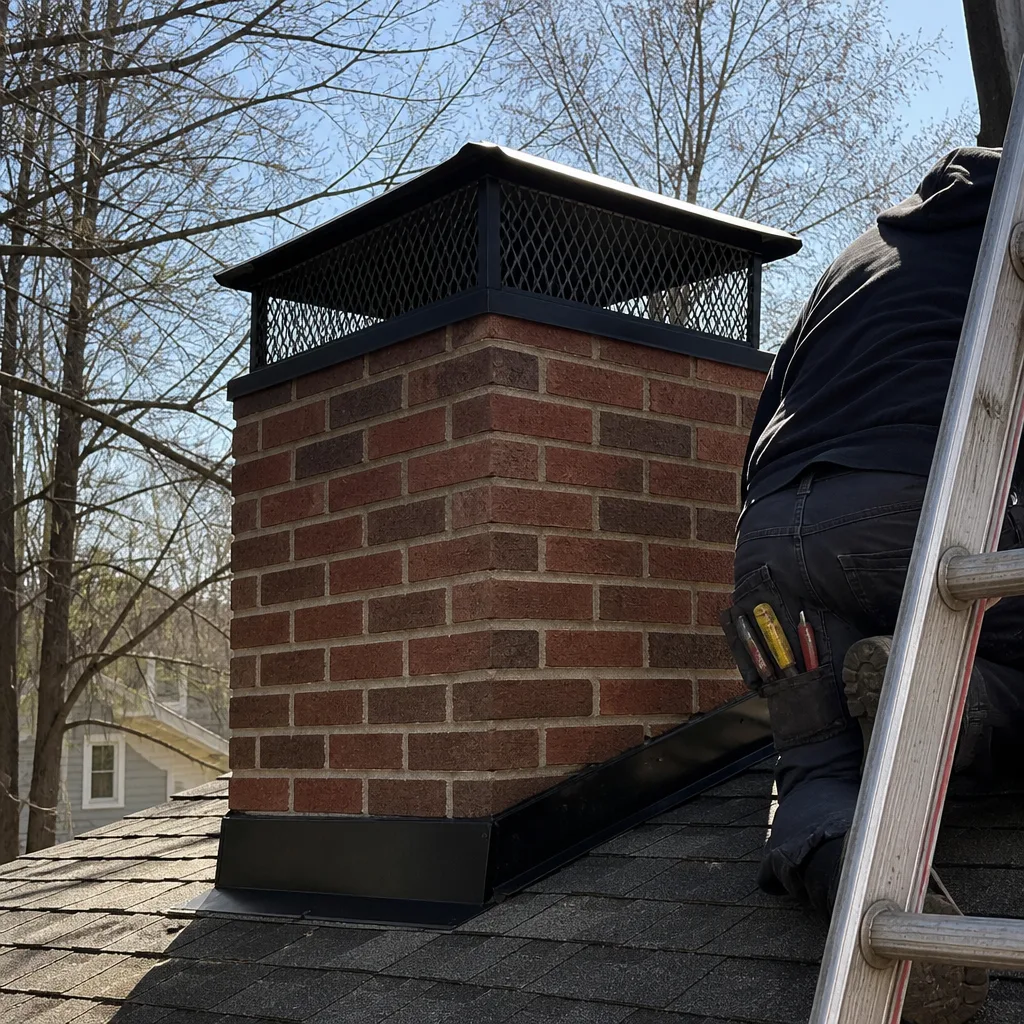 After
After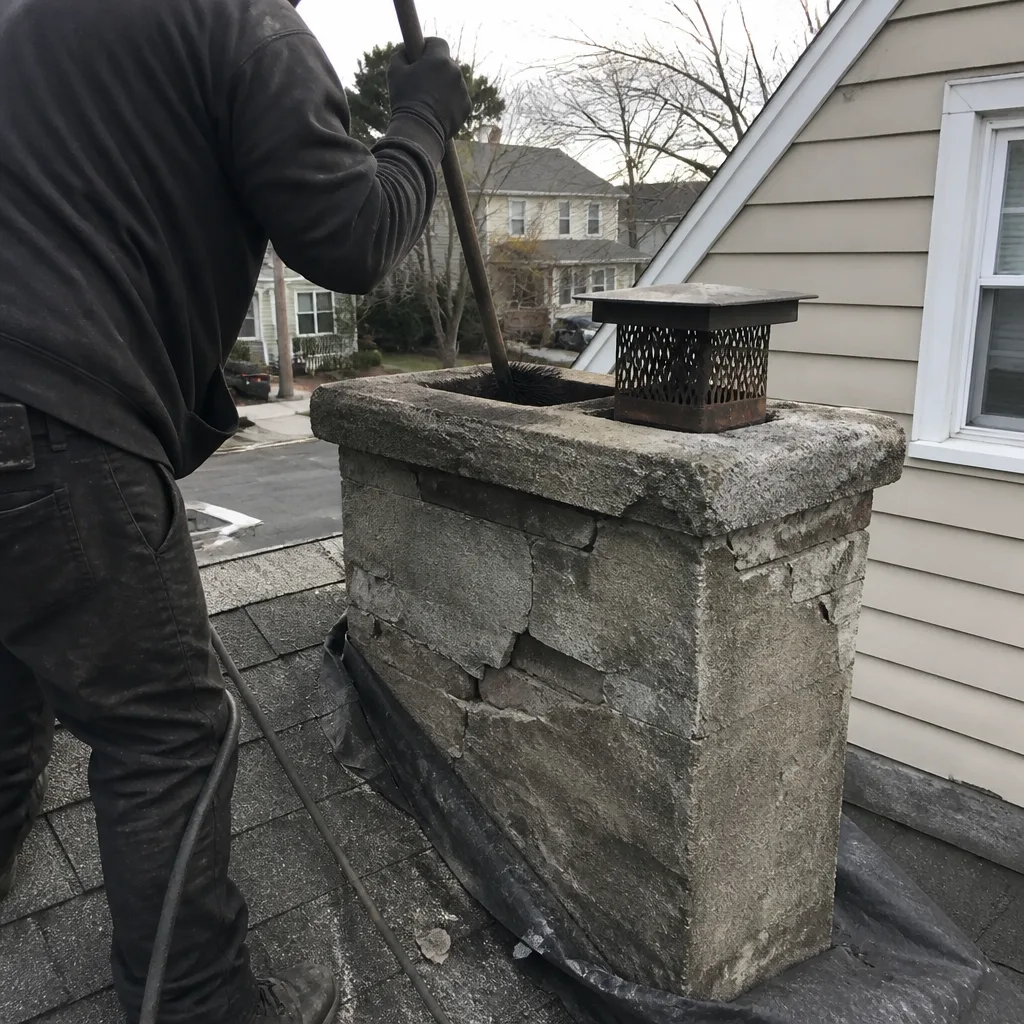 Before
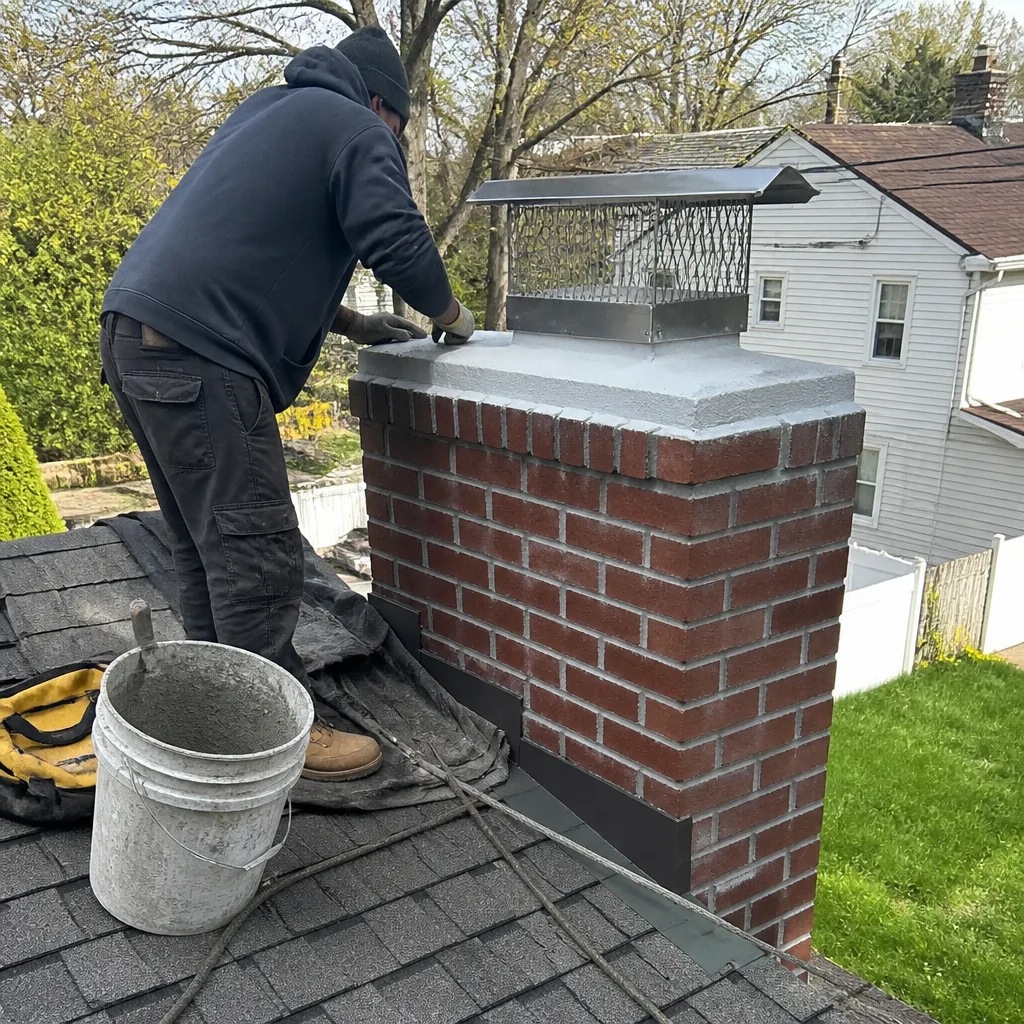 After
After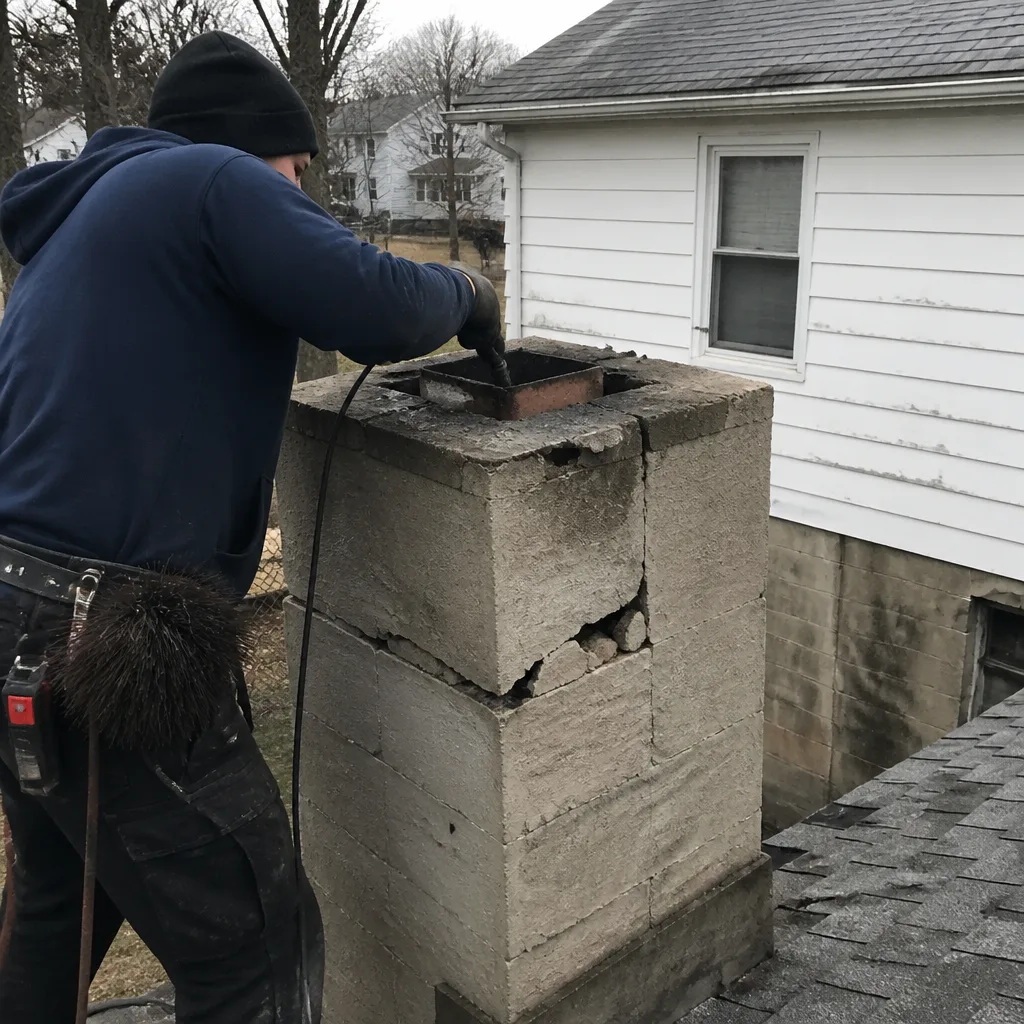 Before
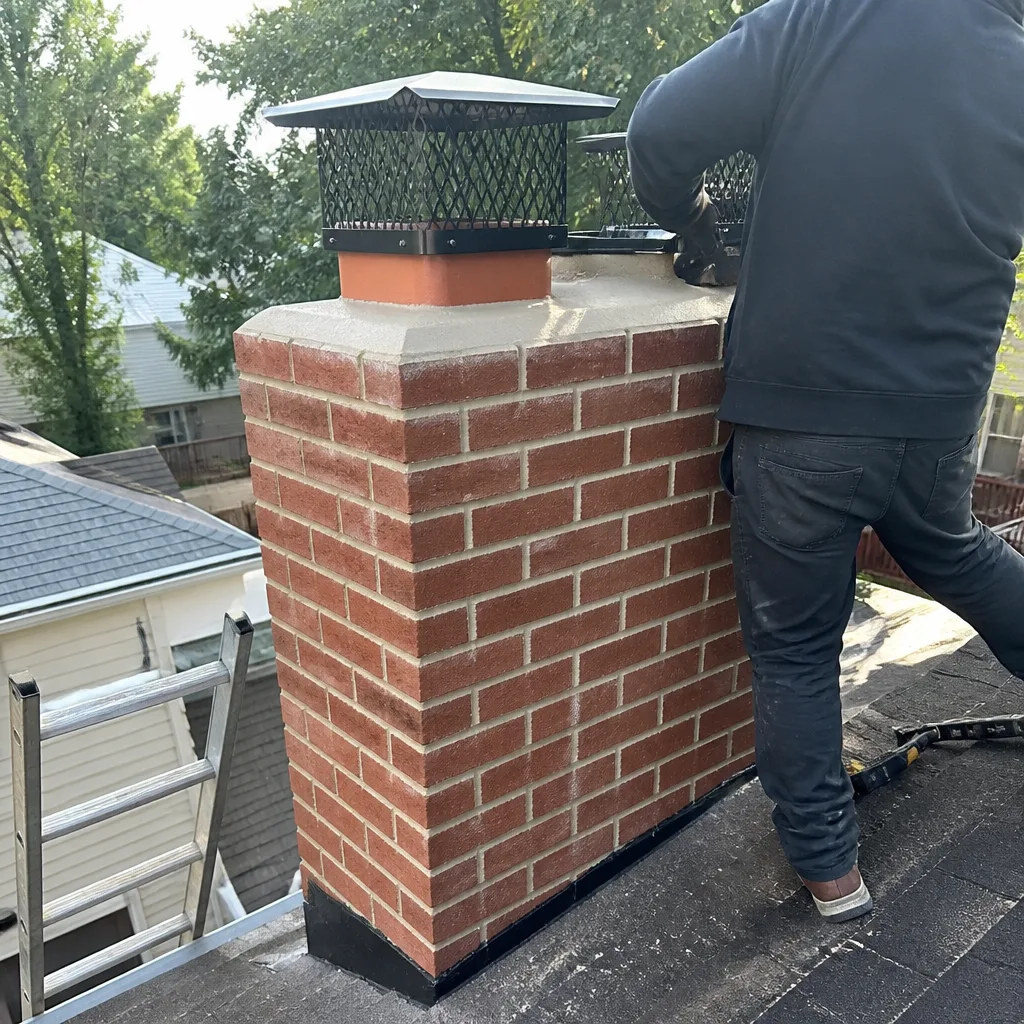 After
AfterDIY vs Professional Chimney Cleaning: The Paterson Homeowner’s Decision Guide
A chimney brush and rod kit costs about $60 and will remove loose soot from a straight, modern, factory-built flue. It will not tell you whether the tile liner behind that soot has a crack routing carbon monoxide into your second floor. In Paterson, where roughly 60% of our housing stock predates 1960 and many chimneys have been modified multiple times over the decades, the gap between “looks clean” and “is safe” is wider than most homeowners realize. This guide defines exactly when DIY cleaning is defensible, what it cannot accomplish, and how to tell which side of the line your chimney falls on - for seasonal chimney cleaning care Paterson homeowners can trust year-round.
Quick Answer
DIY chimney cleaning is adequate only for straight, factory-built flues in newer homes with no history of chimney fires or liner damage, and only when paired with a professional inspection every 2-3 years. For Paterson’s older masonry chimneys, multi-angle flues, unlined or previously relined systems, or any chimney serving a wood-burning appliance as a primary heat source, hiring a chimney cleaning contractor in Paterson for professional cleaning and inspection together is the only defensible path. The inspection, not the brushing, is what protects your home.
Table of Contents
- When DIY Chimney Cleaning Is Actually Defensible
- What DIY Categorically Cannot Accomplish
- The Equipment Reality: What a DIY Sweep Actually Needs
- How Paterson’s Older Chimney Stock Changes the Risk Calculation
- Five Characteristics That Make Professional Inspection Non-Negotiable
- Honest Cost Comparison: DIY vs Professional in Paterson
- Common Mistakes to Avoid
- When to Call a Professional
- Frequently Asked Questions
- The Bottom Line
When DIY Chimney Cleaning Is Actually Defensible
We have been sweeping chimneys in Paterson for over 42 years, and we will tell you plainly: there is a narrow band where DIY cleaning is not foolish. The problem is that most homeowners do not know whether their chimney sits inside that band, and the consequences of guessing wrong are severe.
Four conditions must all be true for DIY to be genuinely adequate:
- Straight flue with no offsets or angles. The brush must travel from top to bottom in a single vertical line. If your flue turns, bends, or steps, a standard rod kit will not navigate it, and the section you miss will accumulate the most creosote.
- Factory-built fireplace or insert with original, undamaged liner. Metal factory-built systems are designed for homeowner maintenance. Masonry chimneys with clay tile liners are not.
- No history of chimney fires, visible cracks, or moisture intrusion. Past overheating damages liner integrity in ways brushing cannot reveal and may worsen with mechanical agitation.
- Homeowner with basic mechanical confidence and proper safety equipment. Roof work, ladder handling, and working at height in Paterson’s variable weather require judgment that cannot be learned from a YouTube video.
In our experience across Paterson neighborhoods from Eastside to South Paterson, fewer than 20% of the chimneys we inspect meet all four criteria. The 1980s and 1990s saw extensive fireplace conversions and liner “repairs” using materials that have since degraded. A homeowner in the Hillcrest section recently told us his flue was “fine” because he had brushed it annually for fifteen years. Our camera inspection revealed a clay tile liner with a longitudinal crack running twelve feet, hidden behind a thin layer of soot he had faithfully removed. The brushing had given him confidence that was not warranted.
Even when all four conditions are met, DIY cleaning addresses only combustible deposits. It does not evaluate structural integrity, liner condition, or clearance to combustibles. We recommend that even confident DIYers schedule a professional Level-2 inspection with camera documentation every two to three years. The cost is modest compared to the information it provides.
What DIY Categorically Cannot Accomplish
This is where the conversation shifts from preference to safety. There are three categories of inspection that no homeowner, regardless of skill or equipment, can perform adequately on their own chimney.
Liner Condition Assessment
Clay tile liners crack from thermal shock, settle away from mortar joints, and spall from moisture freeze-thaw cycles. Stainless steel liners corrode at weld points and can separate at offsets. Cast-in-place liners develop shrinkage cracks. None of this is visible from the firebox or roof without a camera system designed for chimney inspection. At Hearthstone Chimney Co., our Level-2 inspections use specialized camera equipment to document every square foot of flue surface, and we provide homeowners with photos they can see and a plain-English verdict they can understand. A $60 brush kit cannot replicate this.
Smoke Chamber Integrity
The smoke chamber is the area above the damper and below the flue liner, where combustion gases collect before entering the flue. In Paterson’s older homes, especially in the Manor and Lakeview neighborhoods, smoke chambers were often built with corbelled brick that creates sharp edges and narrow throats. Building codes have required parging (smoothing) of smoke chamber walls since the 1980s, but many pre-code chimneys remain in service. A DIY sweep cannot evaluate whether the smoke chamber walls are properly parged, whether there are gaps exposing framing members, or whether the throat dimension meets current safety standards. These defects are leading contributors to house fires originating in chimney systems.
Crown, Cap, and Exterior Weathering
The concrete crown at the top of a masonry chimney sheds water away from the flue opening. The cap covers the flue termination and prevents animal entry and water intrusion. Both degrade predictably in northern New Jersey’s climate, with freeze-thaw cycles from November through March accelerating concrete spalling and metal corrosion. A homeowner on a ladder can see obvious damage, but cannot reliably assess whether hairline cracks in the crown have penetrated to the reinforcing mesh, whether the cap’s mesh screening is intact enough to stop spark egress, or whether the flue gas clearance to combustible framing meets code. We use professional-grade materials from Gelco and Olympia Chimney for cap and crown replacements, and we document the before condition with photos so homeowners understand why replacement is recommended.
The critical point: creosote removal is only one purpose of chimney maintenance. The other purposes, structural and safety evaluation, require training, equipment, and the ability to see what is not visible to the unaided eye.
The Equipment Reality: What a DIY Sweep Actually Needs
Starter kits marketed online bundle a polypropylene brush, three to six flexible rods, a plastic tarp, and a dust mask. For the narrow band of chimneys where DIY is defensible, this is barely adequate. For Paterson’s typical chimney, it is insufficient and sometimes hazardous.
| Item | Starter Kit | Adequate DIY Setup | Professional Equipment |
|---|---|---|---|
| Brush | Polypropylene, single size ($15-25) | Wire or poly brush sized to flue diameter ($30-50) | Multiple brush types and sizes, power sweeping options ($200-400) |
| Rods | 3-6 flexible poly rods ($20-30) | 12+ fiberglass or steel rods for full flue length ($60-100) | Professional-grade rods, sectional and continuous options ($300-600) |
| Vacuum | None included | HEPA-rated shop vacuum ($150-250) | Industrial HEPA vacuum with fine particulate filtration ($800-2,000) |
| Camera | None | Basic borescope ($80-150) | Chimney inspection camera with articulating head and recording ($3,000-8,000) |
| Respiratory | Dust mask | N95 or P100 respirator ($30-50) | Fit-tested respirator with organic vapor cartridge ($100-200) |
| Roof access | None | Extension ladder, roof anchor, fall protection ($200-400) | Commercial insurance, trained climbers, proper anchorage (included in service) |
| Total investment | $60-80 | $550-950 | $5,000-15,000+ (typical professional outfit) |
The honest math: a homeowner who genuinely wants to perform adequate DIY maintenance on a suitable chimney should expect to spend $550 to $950 on equipment. At professional sweep rates in the Paterson market, that investment equals roughly three to five professional cleanings with full inspection. For a chimney that meets all four defensibility criteria, the break-even point is years away, and the DIYer still lacks the training to interpret what they see.
We do not sell equipment. We have no stake in a homeowner’s DIY choice except this: we have responded to chimney fires in Paterson homes where the homeowner believed they had been “keeping up with it.” The brushing was done. The inspection was not.
How Paterson’s Older Chimney Stock Changes the Risk Calculation
Paterson’s housing market is distinctive. The city’s industrial-era growth produced dense neighborhoods of wood-framed and masonry homes built between 1880 and 1940, followed by mid-century construction and later infill. This layering creates specific chimney challenges that a generic DIY guide cannot address.
Multi-angle flues. In the Eastside and Downtown historic districts, many chimneys were built with offsets to navigate around floor joists and structural members. These offsets were constructed with clay thimbles or parged transitions that degrade over decades. A straight rod kit will not navigate a flue with a 30-degree offset. Worse, aggressive forcing of rods through an offset can damage already-compromised liner sections.
Oversized fireplace throats. Pre-1950s fireplaces were designed for aesthetics and draft, not for the combustion efficiency standards that emerged later. Oversized throats create turbulent flow patterns that deposit creosote in unpredictable locations. We regularly find heavy creosote accumulation in the smoke chamber and upper flue of these systems, precisely where DIY brushing is least effective.
Unlined or historically relined masonry. Many Paterson chimneys were built without liners or with early clay “pote” liners that are now fractured. The 1970s and 1980s saw widespread relining with aluminum and early stainless products that have reached end of service life. A homeowner brushing an unlined chimney is applying mechanical force directly to century-old brick and mortar, accelerating deterioration without knowing it.
Moisture intrusion from failed crowns. Paterson receives approximately 47 inches of precipitation annually, with significant freeze-thaw cycling. Crown failure is endemic in neighborhoods where original concrete crowns were never maintained. Water entering the chimney system degrades liners from the outside, a condition that brushing cannot address and may conceal by removing the surface evidence.
Prior modifications of uncertain quality. In four decades of work in Paterson, we have encountered chimney “repairs” performed by previous owners, handymen, and unqualified contractors that range from ineffective to dangerous. We have found automotive muffler pipe used as flue liner, ordinary mortar applied over active cracks, and chimney caps installed with screws driven directly into flue tiles. A DIY brush passes over these conditions without revealing them.
The honest verdict for Paterson homeowners: the age and modification history of your chimney almost certainly places it outside the narrow band where DIY is defensible. This is not a judgment on your capability. It is a statement about the structural reality of the housing stock in our city.
Five Characteristics That Make Professional Inspection Non-Negotiable
We use this framework in the field when homeowners ask whether they can handle maintenance themselves. If any of these five characteristics apply to your chimney, the cost of professional inspection is not optional. It is the cheaper path.
- Your home was built before 1980. Pre-1980 chimneys in Paterson are unlikely to meet current liner and clearance standards. Even well-maintained systems require evaluation for degradation.
- You burn wood as primary or significant supplemental heat. Heavy use accelerates creosote accumulation and thermal cycling damage. Occasional decorative fires in a gas-assisted fireplace present different risk profiles.
- You have never had a Level-2 inspection with camera documentation. “I had it swept” is not the same as “I know the condition of the liner.” If you have no documented baseline, you are managing blind.
- Your chimney has ever experienced a flue fire, water leak, or significant seismic event. Each of these can damage liner integrity in ways that are not visible from the firebox or roof.
- You are preparing to sell your home or have recently purchased it. Disclosure requirements and insurance underwriting increasingly require documented chimney condition. A professional inspection with photo documentation protects both parties.
These characteristics overlap heavily in Paterson’s housing market. A typical homeowner in the Totowa section, for example, might check four of the five boxes. The fifth, recent purchase, may also apply. In such cases, DIY brushing is not merely insufficient; it is potentially misleading in its reassurance.
Honest Cost Comparison: DIY vs Professional in Paterson
Cost is a legitimate consideration, and we address it directly. The Paterson market for chimney services reflects northern New Jersey’s cost structure, with some variation between established companies and itinerant operators.
DIY path, adequate equipment: $550-950 initial investment, plus $30-50 annual brush replacement, plus your time (3-6 hours for a careful job including setup and cleanup), plus risk of incomplete work, plus no inspection documentation.
Professional sweep with Level-1 inspection: $175-275 in the Paterson market for a standard masonry fireplace, including debris removal and basic condition check. This is brushing plus visual evaluation from accessible areas.
Professional sweep with Level-2 camera inspection: $275-450, including full flue camera survey, smoke chamber evaluation, exterior condition assessment, and documented report with photos. At Hearthstone Chimney Co., this includes our plain-English verdict and, if work is needed, no-hassle upfront pricing with the number on the estimate matching the number on the invoice.
The $89 Seasonal Tune-Up we offer seasonally includes sweep and basic inspection for qualifying systems. For homeowners uncertain where their chimney falls on the risk spectrum, this is a low-cost entry point to professional evaluation.
Consider also the cost of being wrong. A chimney fire in Paterson typically produces $15,000-50,000 in structural damage, insurance deductibles, and temporary displacement. Carbon monoxide intrusion from a cracked liner can cause injury or death before detection. Against these possibilities, the differential cost of professional service is modest.
We are not suggesting that every chimney requires immediate professional attention. We are stating that the inspection, not the brushing, is what determines whether your chimney is safe to use. And that inspection requires equipment and training that do not fit in a starter kit.
Common Mistakes to Avoid
- Assuming a clean flue is a safe flue. Soot removal does not evaluate liner condition, clearance to combustibles, or structural integrity. We have inspected flues that appeared clean and were actively dangerous.
- Using the wrong brush size or material. A brush too small for the flue diameter leaves deposits on the walls. A wire brush in a metal factory-built flue can damage the liner. In Paterson’s mixed housing stock, matching brush to flue requires measurement and knowledge.
- Working on the roof without proper fall protection. Paterson’s older homes often have steep pitches and deteriorated roofing. Every year, homeowners are injured in falls that were preventable. The chimney is not worth a broken hip.
- Ignoring the smoke chamber and firebox. Creosote accumulates heavily in these areas, and they are difficult to access and evaluate without training. A brush pushed through the flue does not address deposits above the damper.
- Failing to inspect the crown and cap after cleaning. Dislodged debris can damage cap mesh. Crown cracks worsen with thermal cycling. These are exterior conditions that affect interior safety.
- Continuing to use a chimney after a known flue fire without professional evaluation. Even a small flue fire can crack clay tiles or damage metal liners. The chimney may appear functional while actively hazardous.
- Trusting online reviews of DIY kits over local professional assessment. A five-star review from a homeowner in Arizona with a straight metal flue has no relevance to your 1920s Paterson masonry chimney with an offset and questionable liner history.
When to Call a Professional
Call when any of the five characteristics above applies to your chimney. Call if you smell smoke in rooms other than where the fireplace is located. Call if you notice cracked or spalling brick on the exterior, white efflorescence staining, or pieces of tile in the firebox. Call if your damper operates poorly or if drafting has worsened over time. Call if you have recently purchased the home and have no documentation of prior chimney condition.
At Hearthstone Chimney Co., we have served Paterson and surrounding communities for over 42 years. Our technicians are background-checked and uniformed. We complete most jobs in a single visit. Our Level-2 camera inspections end with photos you can see and a plain-English verdict you can understand. Every job is backed by our 90-Day Done Right Promise in writing, with no arguing: if it’s not right, we make it right.
We offer free estimates in Paterson. Call (973) 604-2986 to schedule. A live person answers every call, 24 hours a day, 7 days a week. No voicemail, no callback queue, no app.
Frequently Asked Questions
A standard sweep with Level-1 visual inspection typically runs $175-275 in the Paterson market. A sweep with Level-2 camera inspection, full documentation, and written report ranges from $275-450 depending on chimney configuration and accessibility. Our $89 Seasonal Tune-Up offers reduced-rate entry for qualifying systems. Call (973) 604-2986 for an exact quote for your specific chimney - estimates are free.
The National Fire Protection Association recommends annual inspection for all chimney systems, with cleaning frequency determined by use and deposit accumulation. In Paterson, where many homeowners burn wood as supplemental heat through extended heating seasons, we typically recommend annual sweep and inspection for active wood-burning systems. Gas fireplaces require less frequent cleaning but still need periodic inspection for venting integrity and debris obstruction. Call (973) 604-2986 to discuss your specific use pattern.
We do not recommend liner replacement without camera-documented evidence that you can see for yourself. In our inspection process, we show you the photos, explain what they indicate, and provide a plain-English verdict. Some conditions require immediate action. Others can be monitored with periodic re-inspection. We will tell you plainly when work can safely wait and when it cannot. No documentation, no recommendation - that is our standard.
Three outcomes are possible, and they worsen in sequence. First, creosote accumulates to levels that support chimney fires, which can reach 2,000 degrees and damage liners, surrounding framing, and roofing. Second, liner degradation allows combustion gases including carbon monoxide to enter living spaces, often without visible warning. Third, moisture intrusion from failed crowns and caps causes structural deterioration that progresses from repairable to requiring rebuild. The first two present immediate safety hazards. The third escalates cost dramatically. Regular professional inspection catches all three at manageable stages.
A standard shop vacuum lacks the fine particulate filtration needed for creosote and soot, which contain compounds hazardous to respiratory health. HEPA-rated shop vacuums ($150-250) are adequate for DIY cleanup but must be used with proper respiratory protection. Professional chimney vacuums use multi-stage filtration and are designed for hot ash handling. We do not recommend attempting to vacuum a recently used fireplace without confirmed cooling and proper equipment.
Paterson follows the New Jersey Uniform Construction Code, which references NFPA 211 for chimney standards. Liner installation, chimney rebuilds, and certain repairs require permits and inspection by the city building department. Cleaning and routine maintenance typically do not require permits. We handle permit applications as part of our repair and installation services, and we document that all materials meet code requirements. For DIY work that involves structural modification or liner replacement, permit compliance is the homeowner’s responsibility, and failure to obtain proper permits can complicate insurance claims and home sales.
The Bottom Line
DIY chimney cleaning is learnable for a narrow subset of chimneys: straight flues, factory-built systems, no damage history, and homeowners with proper equipment and safety practices. The brushing itself is not the hard part. The hard part is knowing whether your chimney falls into that subset, which requires inspection that DIY cannot provide.
In Paterson, the age, modification history, and structural variety of our housing stock means most chimneys sit outside the DIY-defensible band. The inspection gap, not the cleaning gap, is what creates risk. A professional Level-2 camera inspection with documented photos and a plain-English verdict gives you information that no brush kit can provide. For more guides & resources on keeping your chimney safe, explore our blog. That information is what lets you use your fireplace with confidence, or address problems before they become emergencies.
We have been doing this work in Paterson for over 42 years. We plan to be here for decades more. That long horizon is why we document everything, stand behind our work in writing, and answer our phones with a live person every hour of every day. Done right, and we stand behind it.
Written by Russell Haines, Owner at Hearthstone Chimney Co., serving Paterson since 2014.